Pillow Chase Home App
- 4.4
- Rating
- 10.00M
- Installs
- Free
- Price

 Analysis by App-foxy
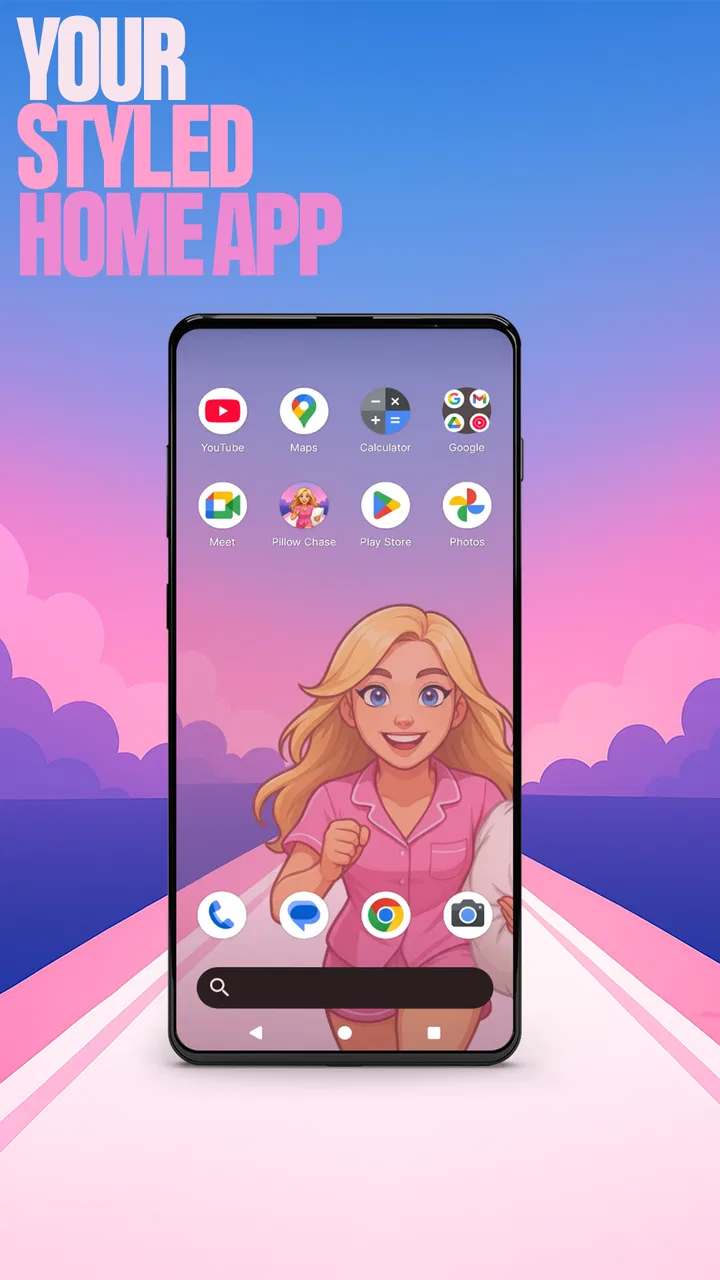
I approached Pillow Chase: Home App as a personalization app rather than assuming it would behave like a conventional game or a full home-screen replacement. That distinction matters from the first minute. Its short store description is simply “Pillow Chase,” while the longer summary invites you to turn every run into an adventure, so the app presents itself with a playful identity and a focus on making your phone feel more personal.
My first impression was that this is aimed at people who want a themed experience around their device without having to commit to a complicated customization project. The idea is appealing if you enjoy changing the visual mood of your phone, especially when a familiar home screen has started to feel dull. At the same time, I would not treat it as a universal replacement for every personalization tool. Its value depends on whether the Pillow Chase style fits your taste and whether you prefer a ready-made concept over building every detail yourself.
Hadiz Studio is the developer behind the app, and its presence on Android is already substantial: the listing shows over a million installs and an average rating of 4.5 from around eighteen thousand ratings. Those figures make it easier for a first-time user to approach the app with some confidence, although popularity cannot tell you whether its particular look will suit your phone or routine.
You May Also Like

 Blood Strike: 2.5 Anniversary
Blood Strike’s Loadouts Turn Every Drop Into a Tactical Gamble
A close look at Blood Strike’s custom loadouts: how fast access to signature weapons reshapes its battle royale rhythm, rewards preparation, and narrows the gap between fights.

 Pandora - Music & Podcasts
Pandora’s Music Is Easy to Start, but Harder to Recover
Pandora’s strength is its low-effort path from a seed to a station. Its weak spot is how much confidence it asks you to place in connection, setup, and quiet recovery.

 8 Ball Pool
 Is Built on Rivalries, Rematches, and Routine
A close look at the rivalries, rematches, shared routines, and unanswered safety questions that turn a quick pool match into a persistent mobile community.

 Samsung Music
’s Quiet Strength Is Playing What You Already Own
Its reach comes less from spectacle than from dependable access to a personal library. That simplicity is both the app’s strongest retention engine and its ceiling.

 AccuWeather: Weather Radar
AccuWeather Review: A Quick, Clear Forecast for Everyday Decisions
For everyday plans, the best forecast is the one you can understand quickly. AccuWeather makes rain timing, radar, and local conditions easy to act on, with a few trade-offs.

 Hill Climb Racing
Why Hill Climb Racing Still Turns Crashes Into One More Run
A tiny car, a bumpy hill and one more upgrade: Hill Climb Racing keeps resurfacing because its simple chaos makes every near-miss feel personal.
More From Our News Desk



Getting from installation to a useful first result
I’d use the first setup as a small, reversible experiment: choose one screen to assess, then try the shortcuts you rely on before changing anything else. That makes it easier to tell whether the theme genuinely suits your routine or merely looks appealing while you browse. Once that practical test is clear, the next question is what to expect before you begin.
What to expect before you begin
The app is free, which removes the biggest barrier to trying it. It is marked for Teen users, so it is not positioned as a child-only experience. It runs on Android 8.0 and later, giving it a reasonably broad compatibility range for people using older devices as well as newer phones. The current version is 1.4, so I would still check that your phone is supported before planning a larger customization session.
Because this is categorized under Personalization, I would begin with a simple goal instead of trying to redesign everything immediately. Decide whether you want a new visual atmosphere, a themed home experience, or a quick change that makes your phone feel less ordinary. That small decision prevents the common first-time mistake of opening a customization app without knowing what “finished” should look like.
The playful running-adventure idea also sets an expectation about tone. This is not the sort of utility I would choose when I need a plain, efficient interface with no visual personality. It makes more sense for someone who likes a recognizable theme and wants the phone to feel a little more expressive. If you usually prefer the cleanest possible default launcher arrangement, the app may feel more decorative than useful.
Start with a low-risk setup
After installing, I recommend taking a moment to look through the available presentation before making it your permanent daily setup. A first pass is useful because it lets you judge the visual style against your existing wallpaper, icons, and widgets. Even an attractive theme can feel crowded when placed beside unrelated elements, so the strongest result usually comes from treating the app as part of one visual plan rather than an isolated download.
For a reassuring first setup, keep your existing arrangement in mind and change only what you can easily reverse. This is especially sensible if your phone is used for work, school, navigation, or quick access to important apps. A personalization change should make those tasks more pleasant, not turn your home screen into a puzzle. I found that thinking in terms of “one screen first” makes the process less intimidating than attempting a complete makeover.
Another practical tip is to notice how the new look affects recognition. A themed design may be attractive, but familiar app locations and visual cues are what make a phone fast to use. If an element looks good but slows down your first few taps, it is not necessarily a successful customization. Keep the parts that improve the mood without sacrificing the shortcuts you use several times a day.
Your first meaningful success
The first useful milestone is not merely opening the app. It is reaching a home-screen arrangement that you can understand immediately and use without hesitation. I would test it with a small routine: unlock the phone, open your most-used communication app, check something you normally check, and return to the home screen. If those actions feel natural while the Pillow Chase theme adds character, you have already achieved what the app needs to do well.
Try this test at different moments rather than judging only while sitting still. A design that looks excellent when you are exploring it may be less practical when you are walking, rushing, or using the phone with one hand. The best personalization is often the part you stop noticing because it supports your habits instead of interrupting them.
I also recommend taking your time before adding more visual changes. The temptation with a themed app is to keep adjusting until every detail matches. In practice, a restrained setup often looks more intentional. Leave space around the elements you need most, keep your primary shortcuts easy to spot, and treat the theme as a frame for your daily use rather than the entire purpose of the screen.
Where first-time users may become confused
The main source of confusion is likely to be the difference between a themed experience and a complete replacement for the phone’s normal organization. Personalization tools can change how a device feels without changing every underlying behavior. If you expect Pillow Chase to solve all launcher, widget, icon, and notification preferences at once, you may judge it against a much broader product than it is intended to be.
That is why I would separate appearance from workflow. First decide whether you like the visual identity. Then check whether your usual actions remain easy. If the design is appealing but a particular shortcut becomes awkward, adjust your arrangement rather than assuming the whole app has failed. Conversely, if the style itself does not appeal to you, no amount of rearranging will turn it into a minimalist productivity tool.
Another point worth remembering is that “adventure” should not automatically be read as a promise of a deep standalone game. The product is listed as an app in the Personalization category, so I would approach the running theme as part of its identity and presentation. Anyone looking for levels, competitive play, or a long-form game loop should choose a dedicated game instead.
There is also a useful distinction between novelty and lasting value. A new home-screen theme can feel exciting on the first day, but the real test is whether you still enjoy seeing it after the initial curiosity fades. Use the app for ordinary tasks before deciding whether it deserves a permanent place in your daily setup. That trial period helps separate a genuinely comfortable design from a temporary visual distraction.
How it compares with familiar alternatives
The usual alternative is to stay with the phone’s default home screen and change a wallpaper. That option is faster and often more predictable, but it gives you less of a unified identity. Pillow Chase is more interesting when you want the device to feel deliberately themed rather than simply recolored. The trade-off is that a themed experience asks you to adapt to its style, while a wallpaper usually adapts to the layout you already know.
Another alternative is a general-purpose launcher or icon-pack combination. Those tools are better for people who want fine control over grids, gestures, folders, icon shapes, and the exact placement of every element. They can produce a more personal result, but they also require more decisions and more patience. I would choose Pillow Chase for a quicker, more coherent concept, and a general launcher when precision matters more than convenience.
Manual customization is also the better choice for someone who already has a carefully organized workflow. If your home screen is built around several widgets, work profiles, or carefully separated task areas, a themed app may not offer enough benefit to justify changing that balance. On the other hand, if your current screen is visually forgettable and you want a clear starting point, the focused identity here can be more approachable than assembling a design piece by piece.
Who will get the most from it
I think the best audience is someone who enjoys playful personalization but does not want to spend an evening comparing dozens of unrelated design components. It is also a reasonable choice for a person setting up a newer phone and looking for a distinctive starting point, or for anyone who wants a change of mood without paying to experiment.
A realistic everyday scenario would be returning from a long commute and reaching for the phone to check messages, music, or a reminder. A bland default screen makes the device feel purely functional; a themed home experience can make that repeated interaction feel more enjoyable. The benefit is small but real, especially for people who notice visual atmosphere and like their devices to reflect their interests.
I would be more cautious if you need a highly controlled professional layout, dislike decorative themes, or expect a full productivity system. The app is not the right answer simply because it is free. Free removes the financial risk, but it does not remove the personal cost of learning a layout you do not enjoy. A plain default screen or a more configurable launcher may serve you better in those cases.
Practical habits that improve the result
My first tip is to define one “home base” screen and make it the test environment. Put the shortcuts you use most often where your thumb naturally reaches, then judge the theme around them. This avoids sacrificing speed for appearance and gives you a stable reference if you later decide to expand the design.
My second tip is to evaluate the app during both calm and hurried use. Personalization is easy to appreciate when you are browsing settings, but a home screen earns its place when it works during a rushed message or a quick check before leaving home. If the visual treatment makes important items harder to recognize, simplify rather than forcing yourself to admire it.
My third tip is to treat the theme as a mood choice. The Pillow Chase concept may be a good fit when you want something energetic and lighthearted, but it may feel out of place during a period when you want a quiet, neutral screen. There is no need to regard a customization as permanent. Use it when it makes the phone feel better, and move on when your preferences change.
Finally, keep expectations proportional. The app can give your device a stronger personality, but it cannot make an old phone feel faster or replace the organization habits that keep your digital life manageable. Its success is visual and experiential: it should make everyday interaction more enjoyable without creating unnecessary friction.
My recommendation after trying the approach
Hadiz Studio’s app is worth trying if you want a free, themed personalization experience and the Pillow Chase style appeals to you. The broad Android support, sizeable install base, and strong average rating make it an easy candidate for experimentation, while the Teen content rating gives families a clear indication of its intended audience. I would install it with a small, reversible goal and judge it by daily comfort rather than by the excitement of the first few minutes.
For me, the strongest reason to recommend it is its focused identity. It offers a more distinctive starting point than a routine wallpaper change, without demanding the detailed work associated with building a complete custom launcher setup. The main limitation is equally clear: people who want strict control, a minimalist interface, or a deep game should look elsewhere.
The best first step is simple: create one usable themed screen, test your normal routine, and keep the design only if it makes the phone easier or more enjoyable to reach for. If that test succeeds, Pillow Chase can become a pleasant personal touch rather than another app you open once and forget.
FAQs for Pillow Chase Home App
01What is Pillow Chase Home App designed for?
Pillow Chase Home App is designed to help users manage and enhance their home decor strategies. It provides various tools for visualizing interior design changes, offers decorating tips, and allows users to shop for home accessories directly within the app. This makes it ideal for both amateur decorators and seasoned interior designers.
02Does Pillow Chase Home App offer augmented reality features?
Yes, Pillow Chase Home App includes augmented reality (AR) features that enable users to visualize how furniture and decor items will look in their space before making a purchase. This feature helps in making informed decisions by providing a realistic preview of design changes within the user's actual home environment.
03Is the app accessible on both Android and iOS platforms?
Pillow Chase Home App is available for download on both Android and iOS platforms. This ensures a wide range of users can access its features regardless of their device preference, providing a seamless experience for managing home decor projects across different mobile systems.
04Are there any subscription fees for using the app?
Pillow Chase Home App offers a free version with basic features. However, for access to premium tools, such as exclusive design templates and advanced AR capabilities, there is a subscription fee. Users can choose from monthly or annual plans, depending on their needs and budget.
05How does the app help with home shopping?
The app integrates a shopping feature that allows users to purchase home decor items directly. It provides curated lists of trending products, price comparisons, and user reviews to assist in making smart purchases. Additionally, the app offers personalized recommendations based on a user’s design preferences.
Pros
- Intuitive user interface design.
- Supports multiple smart home devices.
- Customizable automation routines.
- Real-time notifications and alerts.
- Energy-saving mode included.
Cons
- Limited device compatibility.
- Requires stable internet connection.
- Occasional app crashes reported.
- Subscription needed for premium features.
- Limited customer support availability.

Pillow Chase Home App
Gallery